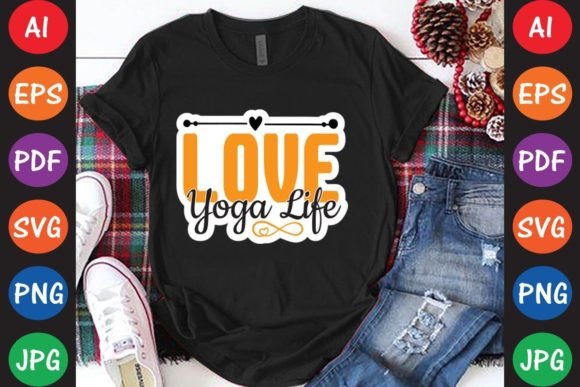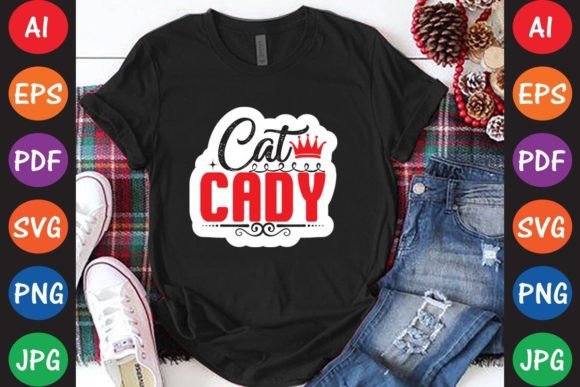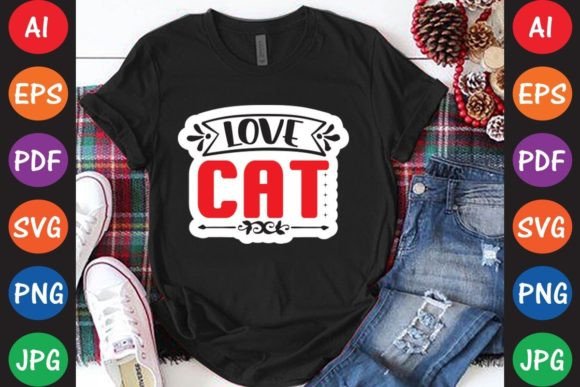
Love Cat: Graphics and T-Shirt Designs
As a designer who regularly works on branding, marketing visuals, and printable products, I always look for high-quality design assets that can elevate a project without requiring too much tweaking. Love Cat caught my eye as a creative design that could be useful in a variety of real-world scenarios. From t-shirt designs to social media graphics, this asset has potential—but it also comes with some considerations.
The First Impression of Love Cat
Love Cat immediately evokes a warm, playful mood. The design features a stylized cat with soft curves and expressive eyes, making it feel approachable and charming. The visual elements are simple yet effective, suggesting a modern design that leans into whimsy rather than complexity. This makes it ideal for brands targeting a younger audience or those looking to inject personality into their visuals.
The style is reminiscent of hand-drawn illustrations or clipart, which gives it a handmade quality. It’s not overly detailed, which means it can work well in both digital and print formats. However, its simplicity also means it may not be the best fit for more formal or corporate projects.
Love Cat in Real Design Situations
When considering how Love Cat performs in real design situations, it’s clear that it excels in areas where visual appeal and emotional connection matter most. For example, in logo design, it could serve as a subtle icon or mascot for a brand centered around pets, creativity, or fun. In brand identity, it might be used as a recurring element to reinforce a playful tone across different touchpoints.
In product labels, packaging design, and posters, Love Cat adds a friendly, engaging presence. It could be a great addition to merchandise like t-shirts, mugs, and tote bags, especially for small business branding or handmade businesses. As a sticker design, it would work well on notebooks, phone cases, or custom stationery, giving a personal touch to everyday items.
For digital ads, Pinterest pins, and Instagram posts, Love Cat offers a visually pleasing element that can catch attention without overwhelming the viewer. It could also be used in Canva templates or Cricut projects, allowing users to quickly add a unique design to their creations.
Where Love Cat Works Best
Love Cat shines in large layout areas, such as hero graphics or product mockups, where its details can be fully appreciated. It also works well as a decorative accent in themed collections or campaign visuals. Its versatility makes it a solid choice for printable designs, whether for personal use or as part of a print-on-demand offering.
As a supporting brand element, Love Cat can enhance the overall aesthetic of a project without competing with other design elements. It’s particularly effective when paired with bold typography or vibrant color schemes, helping to create a cohesive and engaging visual experience.
Where Love Cat Should Be Used Carefully
However, there are situations where Love Cat may not be the best fit. At small sizes, the details can become lost, making it less effective in tight layouts or crowded designs. It also doesn’t perform well on complex backgrounds, where its soft edges might blend in too much or lose contrast.
For minimalist branding or professional corporate materials, Love Cat’s playful nature might not align with the desired tone. Similarly, in projects that require a very clean visual hierarchy, this design could distract from the main message or call to action.
Impact on Readability and Brand Consistency
Readability isn’t a major concern with Love Cat since it’s primarily an illustration rather than text-based. However, when used alongside other design elements, it should be placed thoughtfully to maintain clarity and focus. In terms of brand consistency, Love Cat can help reinforce a brand’s personality, especially if the goal is to appear friendly and approachable.
Its emotional appeal is one of its strongest assets. The design feels inviting and relatable, which can increase audience engagement and foster a stronger connection between the brand and its audience. This makes it a valuable tool for small business branding or Etsy products aiming to stand out in a competitive market.
Practical Designer Notes
Before using Love Cat for a client project, I recommend testing it in black and white to see how it holds up without color. Checking contrast on light and dark backgrounds is also important, as the design’s transparency and edges may affect its visibility.
Previewing Love Cat at different sizes will help determine its effectiveness in various applications. Placing it on real mockups, such as t-shirts or mugs, can give a better sense of how it looks in context. Testing print quality is essential, especially if the design is intended for physical products.
Reviewing the file formats provided—AI, EPS, PNG transparent, SVG, and PDF—is crucial. Ensuring that the PNG transparency works as expected and that the SVG or vector files are editable will save time during the design process. Comparing Love Cat with different font styles can also help find the best pairing for a specific project.
Finally, confirming the commercial license before using Love Cat for a client or business project is a must. This ensures that the design can be used without legal issues, especially in a print-on-demand or digital selling environment.
Final Thoughts on Love Cat
Love Cat is a versatile graphic design asset that can add charm and personality to a wide range of projects. Whether you’re working on t-shirt designs, packaging, or social media graphics, it has the potential to enhance the visual appeal of your work. However, its suitability depends on the context and the overall design direction.
For designers, crafters, and small business owners, Love Cat represents a creative marketplace offering that could be useful in many scenarios. With proper consideration and testing, it can become a valuable addition to a design bundle or a printable design collection. Just remember to use it wisely and ensure it aligns with the project’s goals and audience.